Tag Archives: Solids Control System
What is a Solids Control System?
What Exactly Is a Solids Control System?
The solids control system cleans the drilling fluid, restores its optimal properties, and allows it to be recirculated or safely discharged. It’s not a single piece of equipment, but a coordinated system that works in stages to remove progressively finer particles, ensuring maximum efficiency and minimal waste.
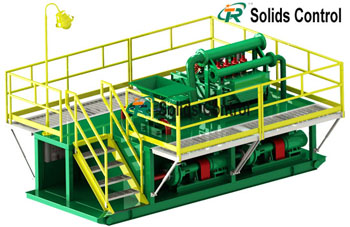
The Core Components: How It All Works Together
Solids control system follow a”from coarse to fine”separation principle, meaning each component targets a specific size of solid particles.
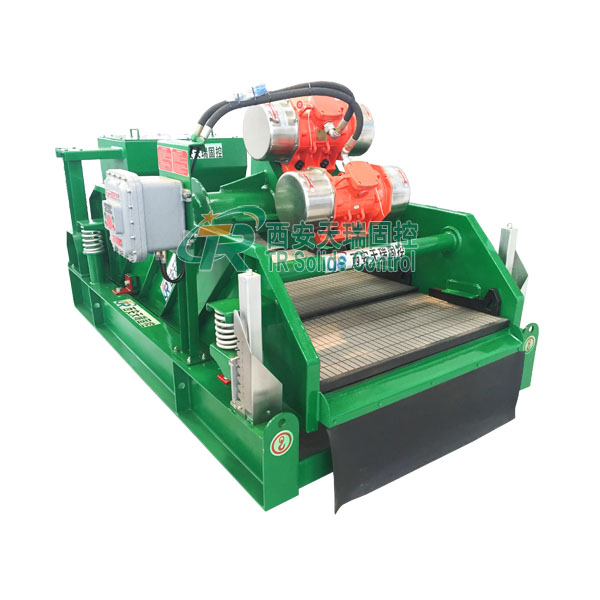
Shale Shaker: The First Line of Defense
The shale shaker is the first stop for drilling fluid returning to the surface. It uses high-frequency vibrating screens to separate large cuttings.The vibrating motion helps shake out rock fragments and debris, which are then discharged, while the fluid (and smaller particles) passes through the screen mesh, significantly reducing the load on subsequent equipment.
Hydrocyclone Units: Targeting Medium-to-Fine Particles
After the shale shaker, the fluid moves to hydrocyclone-based equipment, which uses centrifugal force to separate smaller particles.
- Desander: Equipped with 10-12 inch conical cyclones, desanders target medium-sized solids. Injecting drilling fluid into the cyclone at high pressure, forcing heavier particles to the outside and discharging them, while cleaner fluid is drawn off from the top.
- Desilter: Similar to desanders but with smaller, 4-inch cyclones, desilters focus on finer particles. They’re often used in tandem with desanders.
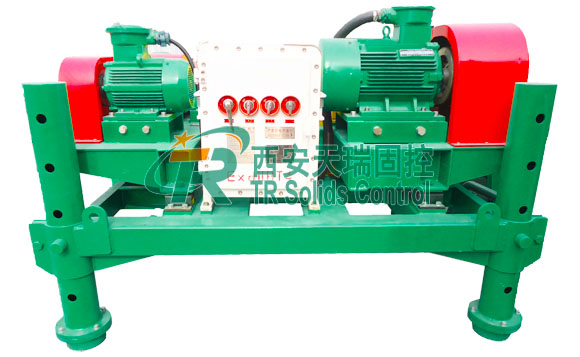
Centrifuge: The Final Fine Separation
For ultra-fine particles, the centrifuge is the workhorse of the solids control system. It uses high-speed rotation to create centrifugal force, pushing solid particles to the outside of a rotating drum while recovering valuable materials like barite.
Auxiliary Equipment: Keeping the Solids Control System Running
- Mud Tanks: Storage and mixing tanks that hold drilling fluid, with compartments divided to allow staged separation.
- Agitators: Turbine or propeller-style devices that prevent solids from settling in the mud tanks, keeping the fluid uniform and ready for processing.
- Pumps: Provide the necessary pressure to circulate fluid through the solids control system, including mud pumps for main circulation and centrifugal pumps for feeding hydrocyclones.
- Degassers: Remove harmful gases that can enter the drilling fluid from the formation, preventing the fluid’s density from dropping and avoiding well control issues.
Why Solids Control System Are Non-Negotiable
- Preventing Drilling Risks-Clean drilling fluid is critical for maintaining wellbore stability and balancing formation pressure.
- Extending Lifespan-By removing these Solid particles, solids control system significantly reduce wear and tear, extending the lifespan of expensive drilling components.
- Reducing Waste and Reusing Resources-Drilling fluid and its additives are costly. A well-designed solids control system recycles up to 85% of drilling fluid, reducing the need for fresh fluid and minimizing waste disposal costs.
- Green Drilling-Solids control system play a key role in meeting these standards. By separating harmful solids from drilling fluid,minimizing soil and water pollution.
In short, a high-performance solids control system is not just equipment,it’s your guarantee for safe, efficient, and eco-friendly drilling. With over 15 years of focus in the field, TR Solids Control stands as your reliable partner. We specialize in designing and manufacturing complete solids control system and core equipment—including shale shakers, desanders, desilters, centrifuges, and mud tanks—all certified to API and ISO standards. Our solutions deliver high separation efficiency, durable performance, and lower operational costs, tailored for oil & gas, HDD, and trenchless projects worldwide.
How is the TR Mud Recovery System
TR Solids Control is a professional manufacturer of solids control system and mud recovery system in China. TR mud recovery system is mainly applied in scenarios such as oil drilling, trenchless engineering, and infrastructure construction. Tr mud recovery system advantages of “integrated design + international certification + high cost performance”. It belongs to the domestic mid-to-high-end tier products. It has passed multiple domestic and international certifications such as API, ISO9001, and ISO14001. It exports cover many countries in the Middle East, Southeast Asia, etc. It has both domestic adaptability and international compliance.
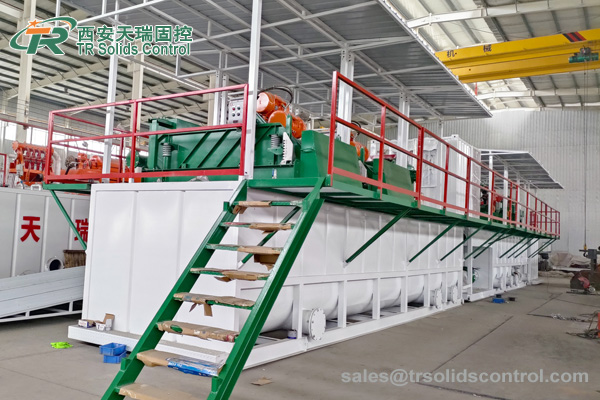
Key parameters and advantages of TR Mud Recovery System
- Large processing capacity: 80m³/h-350m³/h
- High separation accuracy: Solid-phase control accuracy: ≥5μm
- Core technologies: Solidsworks 3D modeling, modular design. The four-stage purification technology (vibrating screen + sand/mud remover + centrifuge) has a higher separation efficiency. Special materials are resistant to abrasion, and the service life of vulnerable parts is over 30% longer.
- After-sales service: Response time: On-site service within 24-48 hours (domestic)
- Personalized customization: It can be specially customized according to the special requirements of customers. Each product is 3D modeled by Solidsworks, allowing customers to have a clearer understanding of the solution.
- Comprehensive certification qualifications: TR Solids Control has passed the American API certification and quality management system certification. Some of the products have passed the CE and CU-TR certifications. And it has multiple products that have passed the CE audit. It has multiple product patents (shale shaker, Drilling Waste Managemnet System)
Disadvantages of TR Mud Recovery System
Although it may not be well-known, the TR mud recovery system works well and is more cost-effective.